Writing
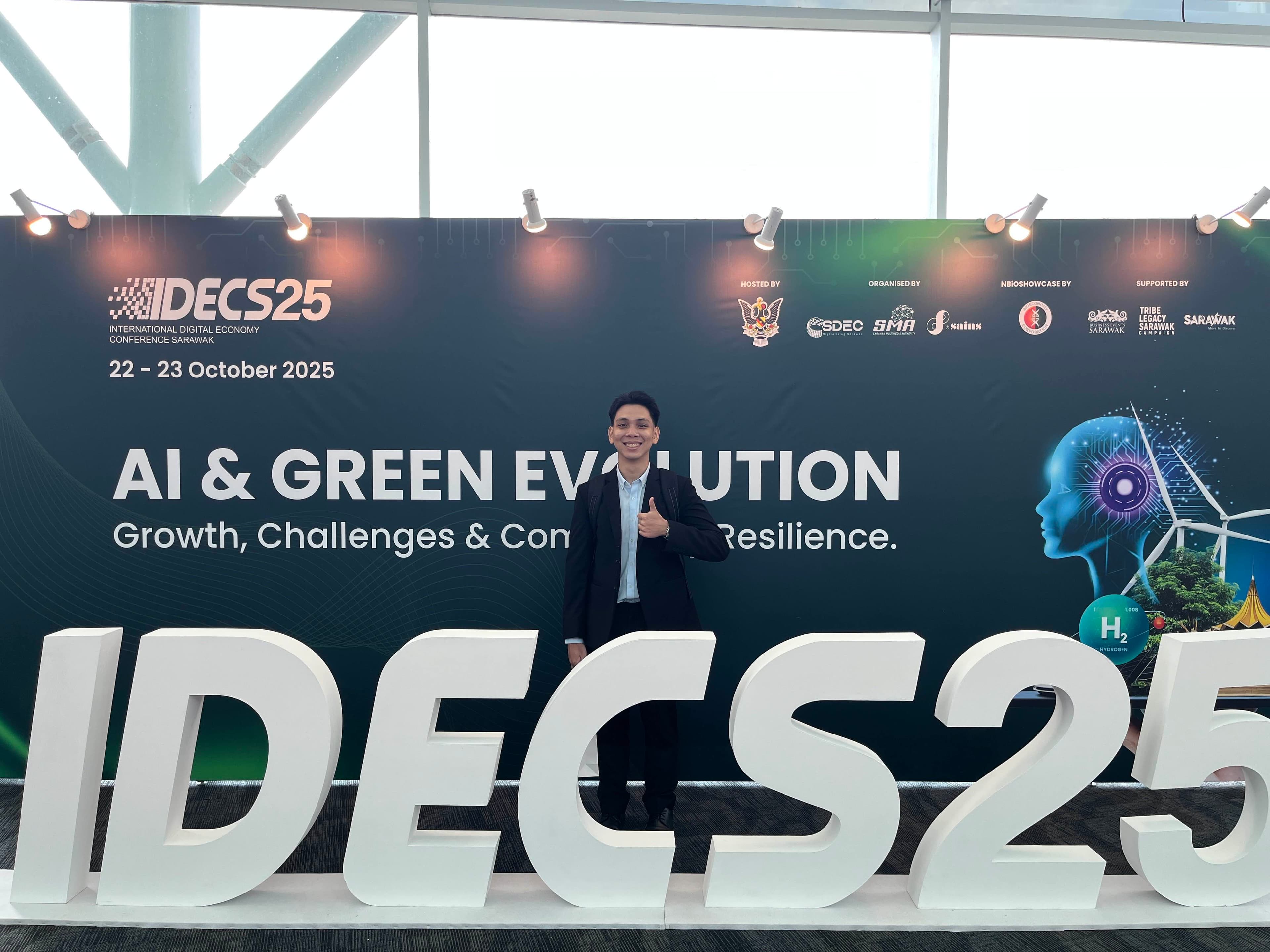
IDECS25 - My Two-Day Experience
10/23/2025
Day 1 – Registration & First Impressions
The first day began with registration, followed by a walk through booths from major tech players like ZTE and Huawei. One recurring theme quickly became clear: data — how it’s collected, processed, and transformed into value using AI.
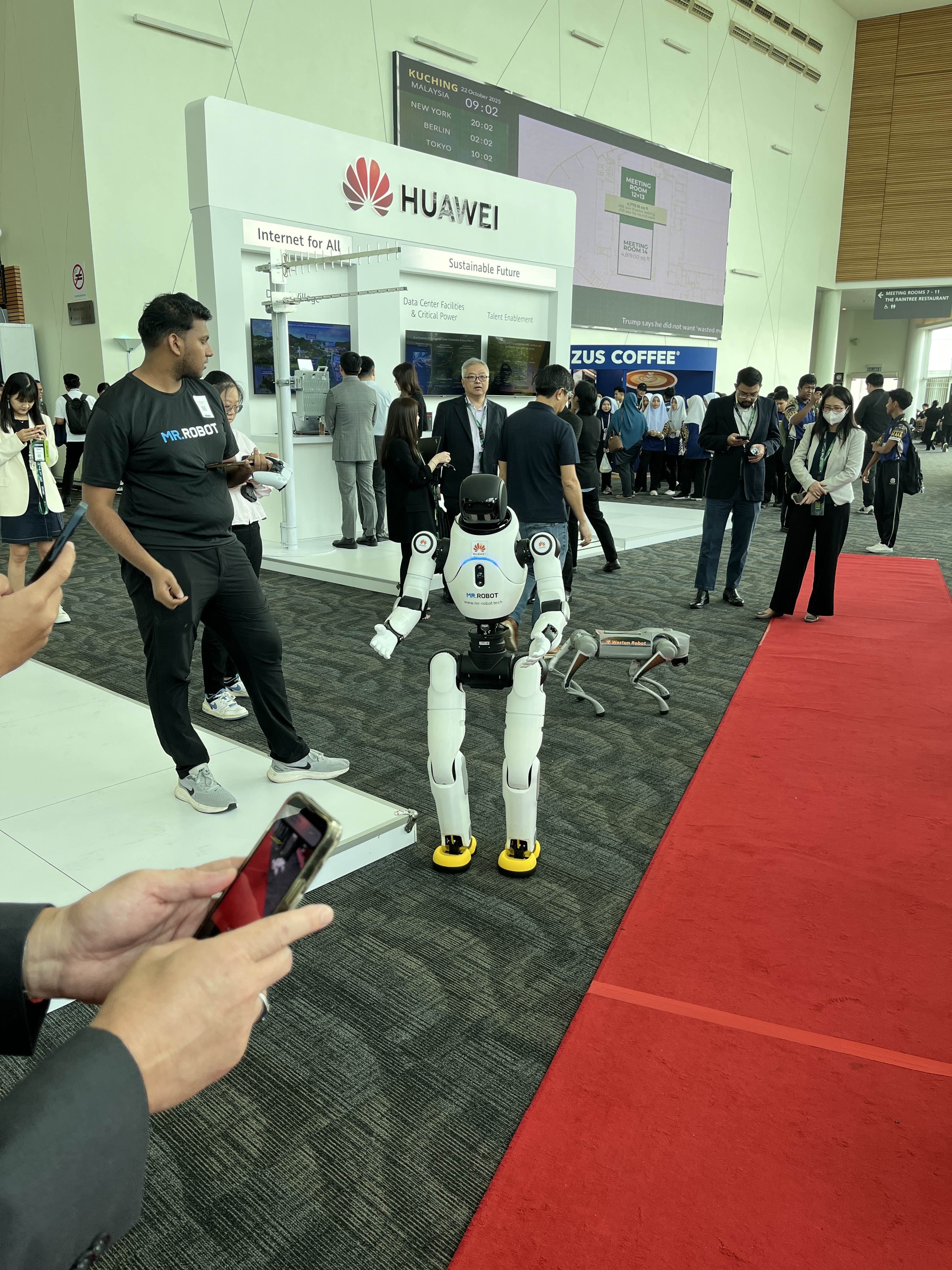
Huawei’s booth was especially eye-opening. Their solutions showcased how deeply integrated they are in enabling smart city infrastructure. While AI has only recently surged into mainstream global conversation, it became apparent that China’s real competitive edge lies not simply in algorithms, but in big data maturity. Years of early digitalization, modernization, and pilot projects have given them a massive head start.
As one Huawei representative put it, “Data is money.”
And in many ways, China is leading this race simply through the sheer volume of data available to train advanced AI models.
Keynote: “Intelligence Explosion: When AI Beats Humans at Everything” — James Barrat
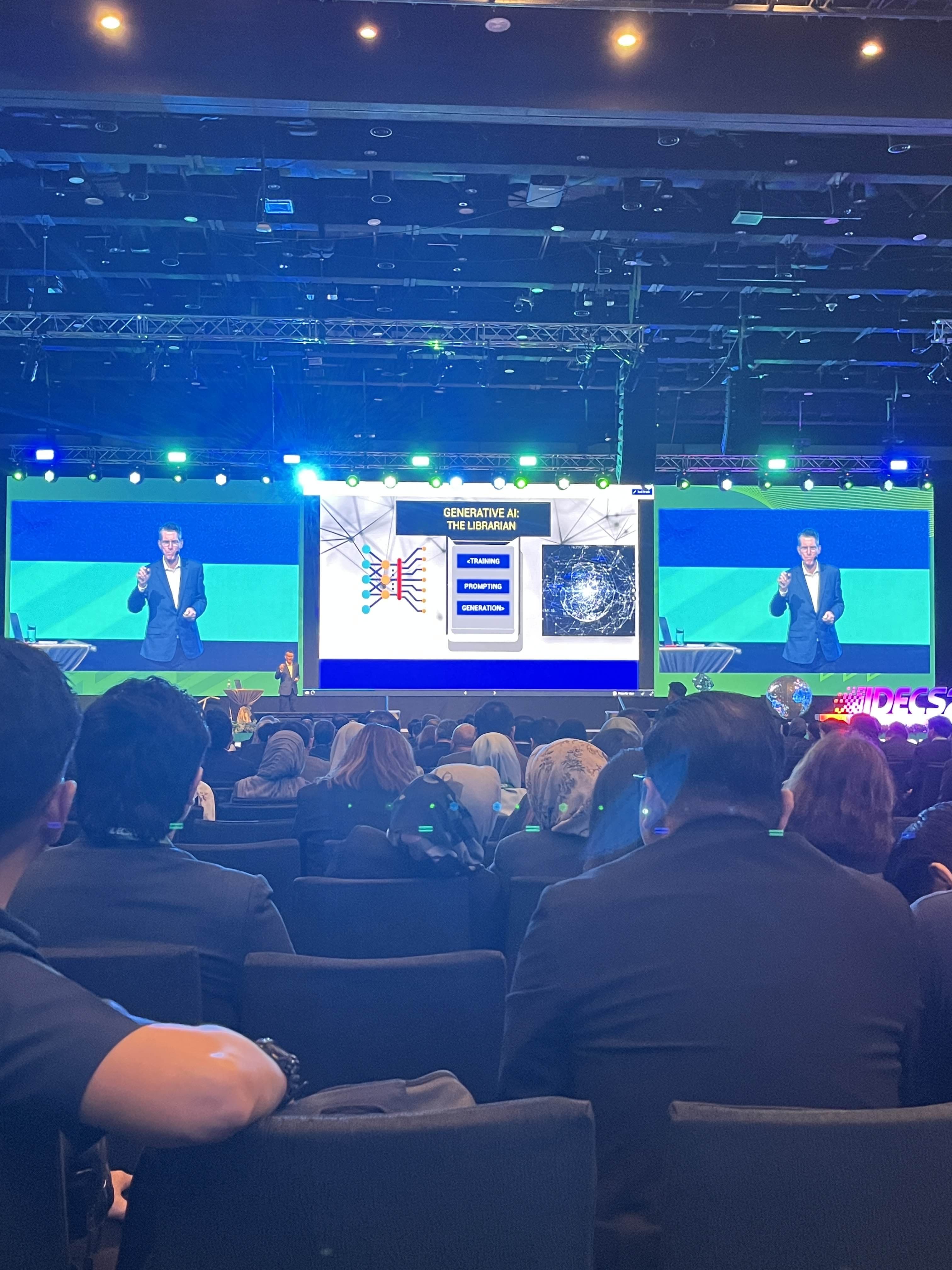
James Barrat (author of Our Final Invention) delivered a keynote that leaned toward the pessimistic side of AI development. He warned that we are:
“Giving AI every tool possible to conquer us,”
“Participating to see who profits most from humanity’s most dangerous experiment.”
He argued that we should pause AI development until we truly understand what's happening inside the “black box.”
Despite the dystopian tone, he raised fair points — especially the concern that AI is advancing faster than our ability to interpret or govern it. A temporary pause, he said, could give humanity time to steer AI toward tools that serve us, rather than threaten us.
Worst-case scenario? “It could be the end of humanity.”
Entertaining, dramatic, but undeniably thought-provoking.
Keynote: “High Capacity Climate Solutionism in the Age of Global China” — Dr. Yifei Li
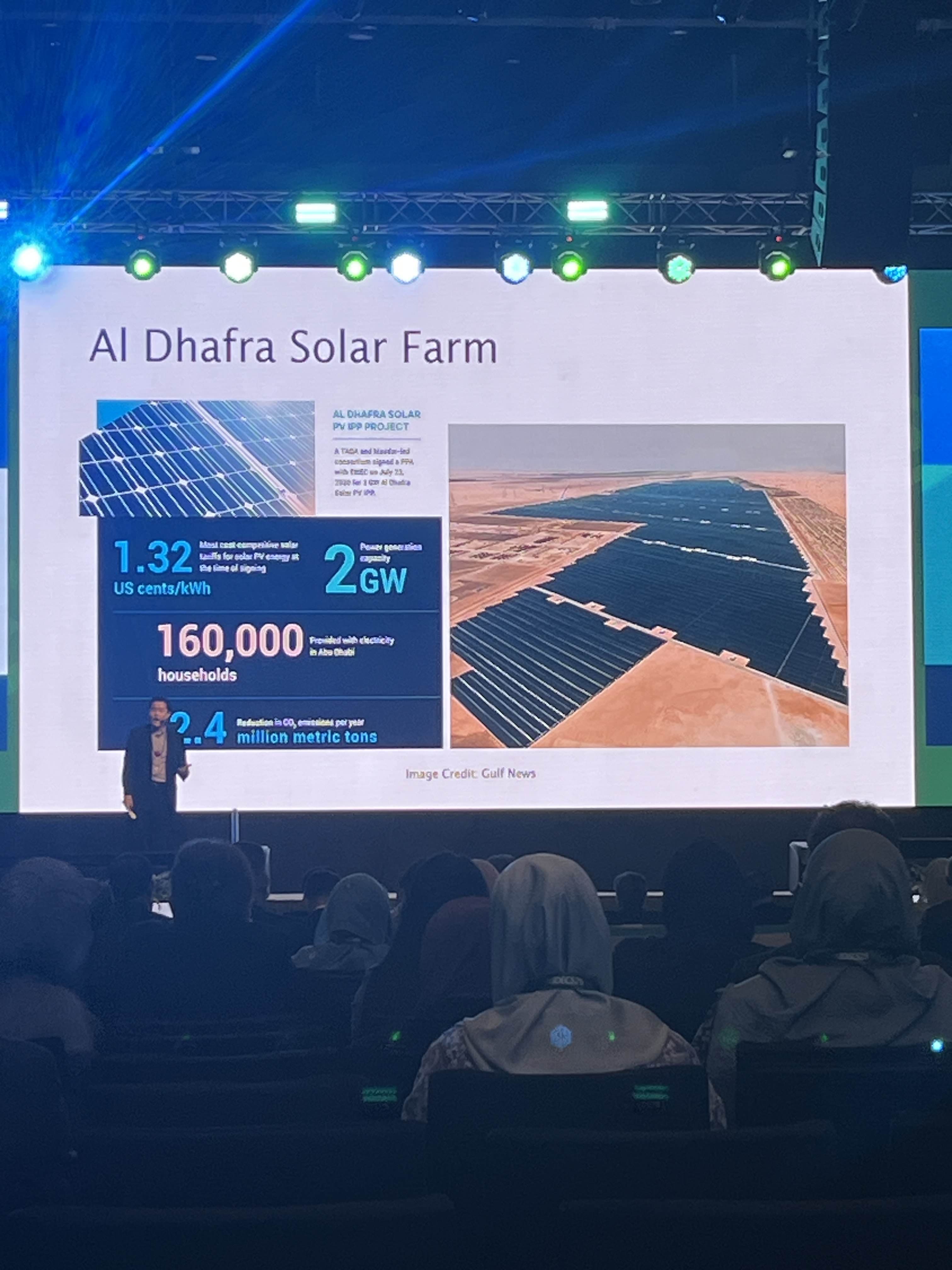
Dr. Li discussed how China deploys high-capacity technological solutions to tackle environmental and societal challenges — often at a larger scale and faster pace than other parts of the world.
This talk highlighted the sharp contrast in how different countries approach national-level digital transformation.
Lunch Break

A simple but satisfying plate of vegetarian fried rice and a spring roll.
Panel Session: “Life After the Intelligence Explosion – What Should Governments Do Now?”
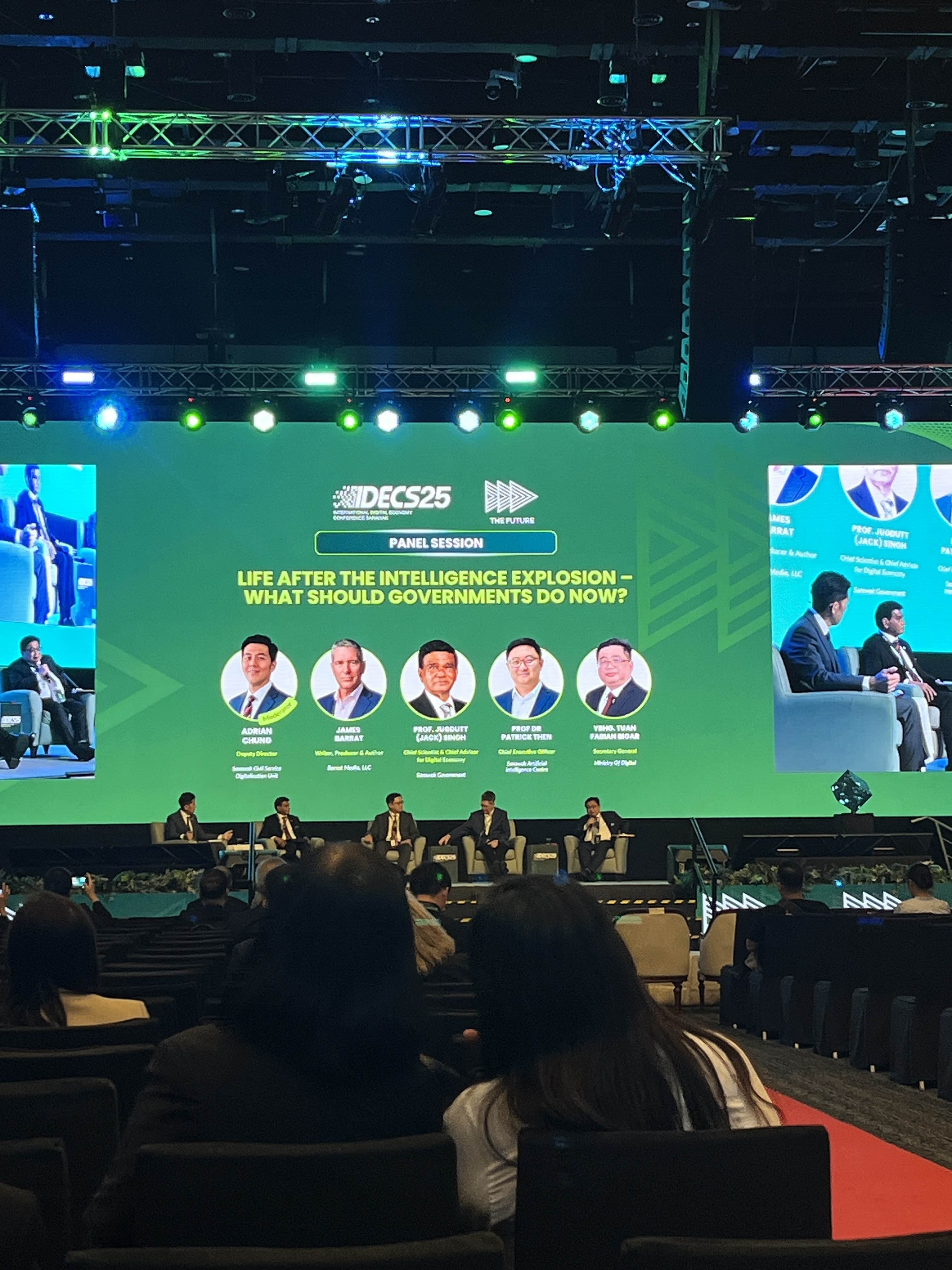
Moderator: Adrian Chung Panelists: James Barrat, Prof Dr Patrick Then, Prof Jugdutt Singh, Ybhg Tuan Fabian Bigar
This discussion centered around how governments — especially Malaysia’s — should handle fast-moving AI developments. The recurring theme across all panelists was:
“People first.”
Whether through policy, governance, or regulation, AI should be treated as a tool, not a replacement. The goal is to ensure citizens benefit from the technology without being harmed by it.
After the panel, I spent the rest of the afternoon exploring more booths and collecting freebies.
Day 2 – New Perspectives & New Conversations Ministerial Insights Address
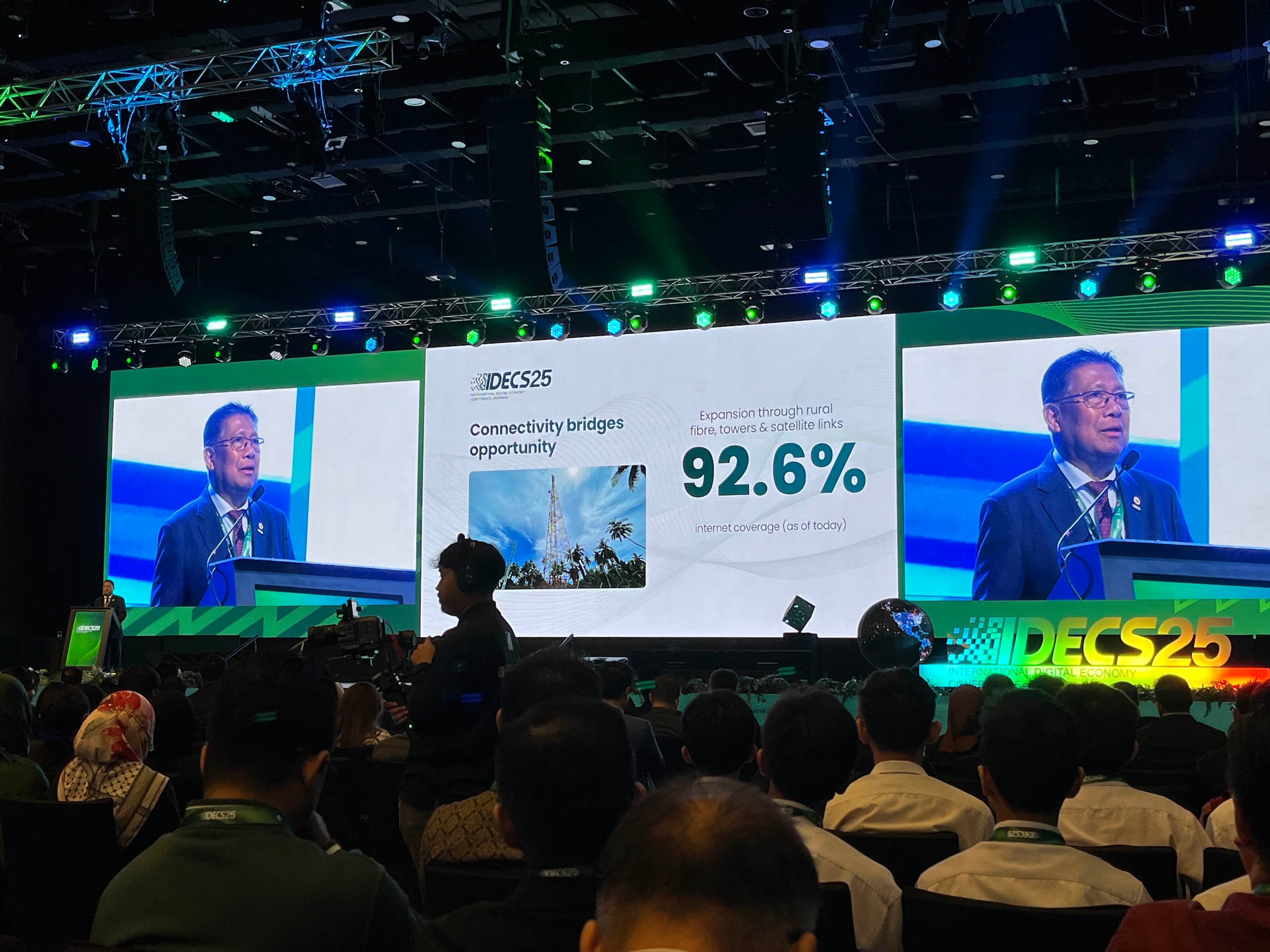
“Ethical AI and the Green Digital Economy: Sarawak’s Path to Regional Leadership” By YB Dato Sri Haji Julaihi Haji Narawi
A high-level overview of Sarawak’s direction in digitalization and utilities — admittedly a bit hard to recall in detail.
Keynote: “Resilient by Design: Shaping Inclusive Futures in an AI-Driven World” — Dr. Ayesha Khanna
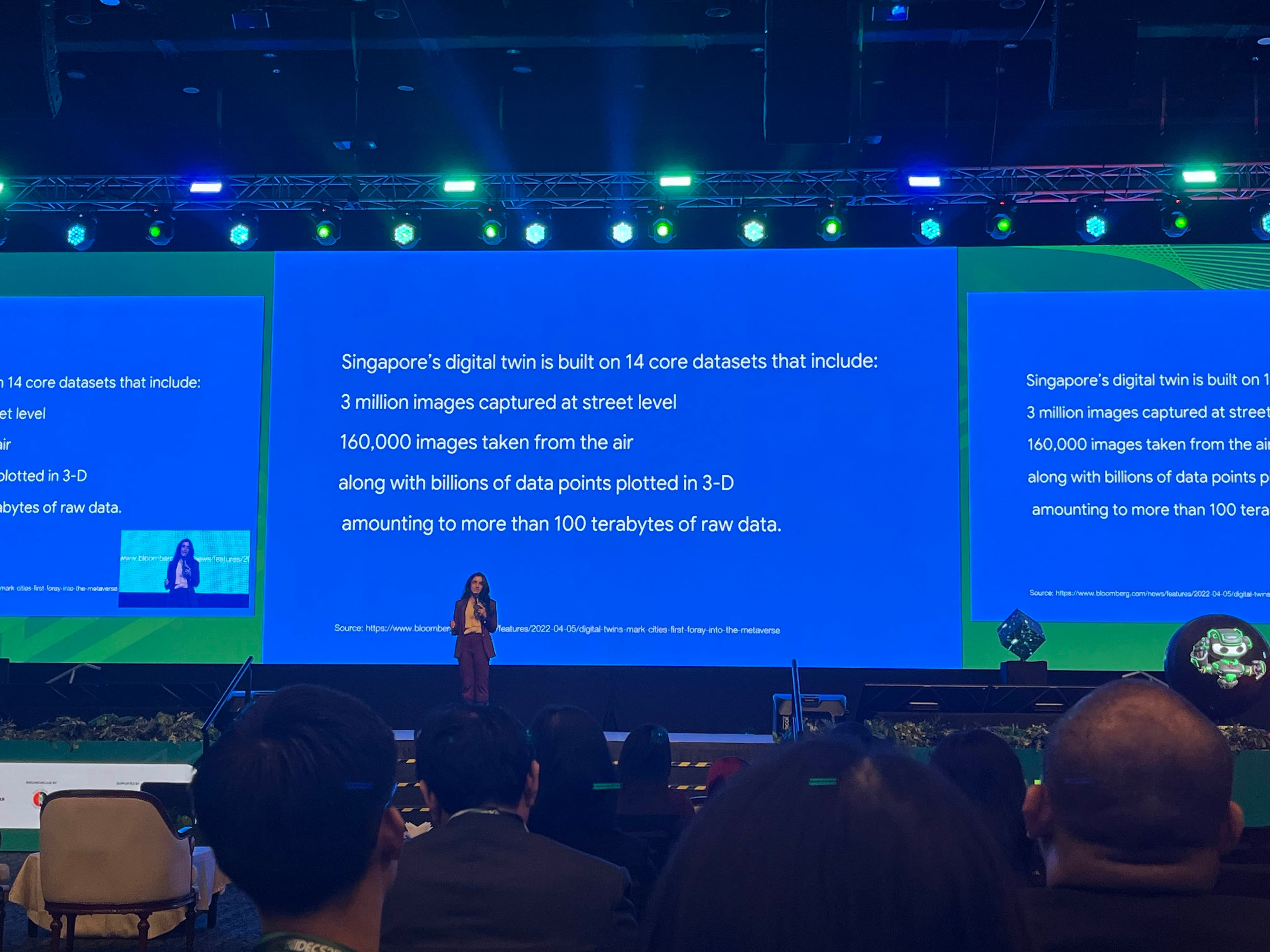
Dr. Ayesha Khanna delivered one of the most energetic, engaging sessions of Day 2.
Her talk explored how societies can become:
-Technologically advanced,
-Yet deeply inclusive.
Drawing examples from across Asia, especially Singapore, she emphasized how AI and digital infrastructure can enhance:
-citizen wellbeing,
-healthcare access,
-safety,
-and quality of life — particularly for the elderly.
Her central message:
AI shouldn’t only drive profit — it should improve life for every citizen, across every age group.
Resilience, trust, and human wellbeing must sit at the heart of the digital future.
Talk: “Worried About AI? Cybersecurity Is Still Living in the 2000s” — Phuong Nguyen
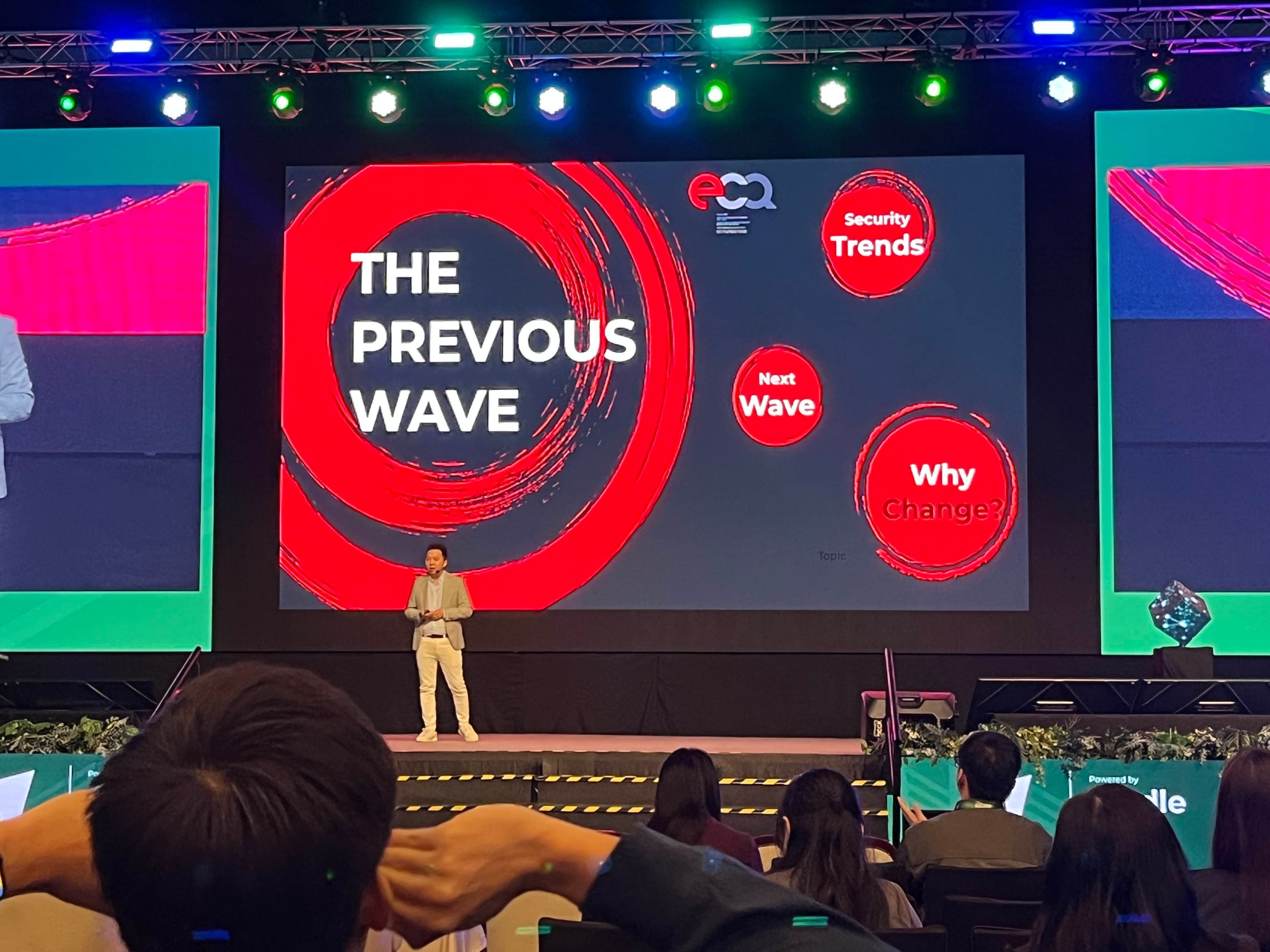
Phuong Nguyen delivered a fast-paced, energetic session pointing out a surprising truth:
"As the world obsesses over advanced AI threats, cyber attackers are still using decades-old techniques — and they still work."
Real incidents from the past 20 years showed the same patterns repeating. The biggest weakness in cybersecurity hasn’t changed:
Humans.
Phishing, social engineering, and simple manipulation remain the easiest paths to breach systems. AI may be advancing, but “basic security hygiene” is still failing.
He also highlighted how incredibly lucrative the cybersecurity industry is — which was admittedly fascinating to hear.
Panel Session: Next-Gen Digital Policy, AI Ethics & Civic Interfaces
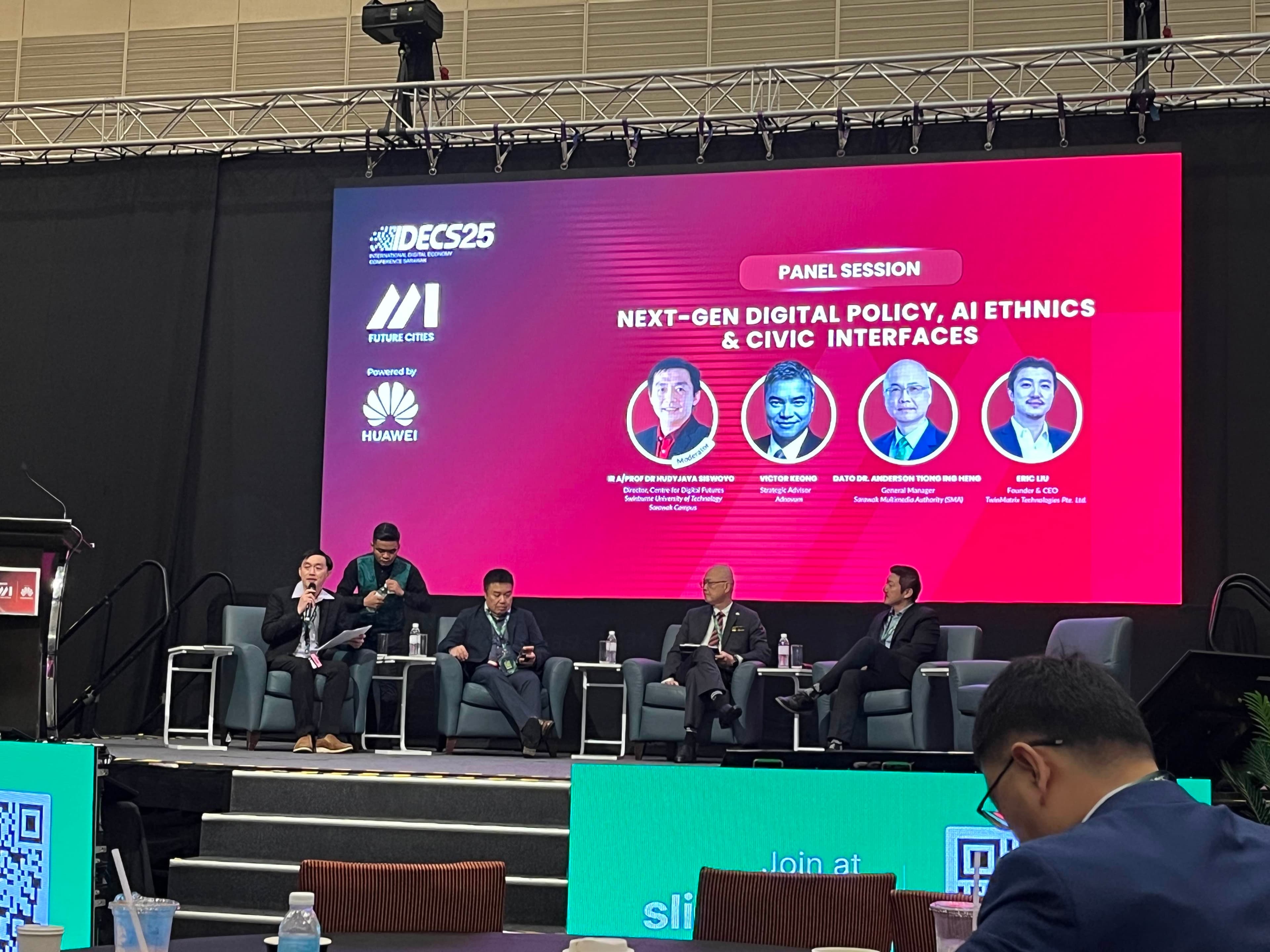
Moderator: Ir A/Prof Dr Hudyjaya Siswoyo Jo Panelists: Victor Keong, Eric Liu, Dato Dr Anderson Tiong Ing Heng
This session explored the role of trust, governance, and citizen-centered policies in the age of AI. As cities adopt more data-driven systems, governments need frameworks that:
-protect privacy,
-promote public participation,
-keep humans in the loop,
-and scale technology responsibly.
Once again, the message came back to human-centered AI, not technology for technology’s sake.
Final Thoughts
Across both days, one theme came up again and again:
AI is powerful — but it must remain human-centered.
From cybersecurity to smart cities, from ethics to policy, almost every speaker echoed the same sentiment: Technology should uplift people, not replace or endanger them.
It was an insightful, thought-provoking two days filled with bold ideas, cautionary warnings, and exciting glimpses of the future.